
AI in logistics: real cases and trends from the ALICE network
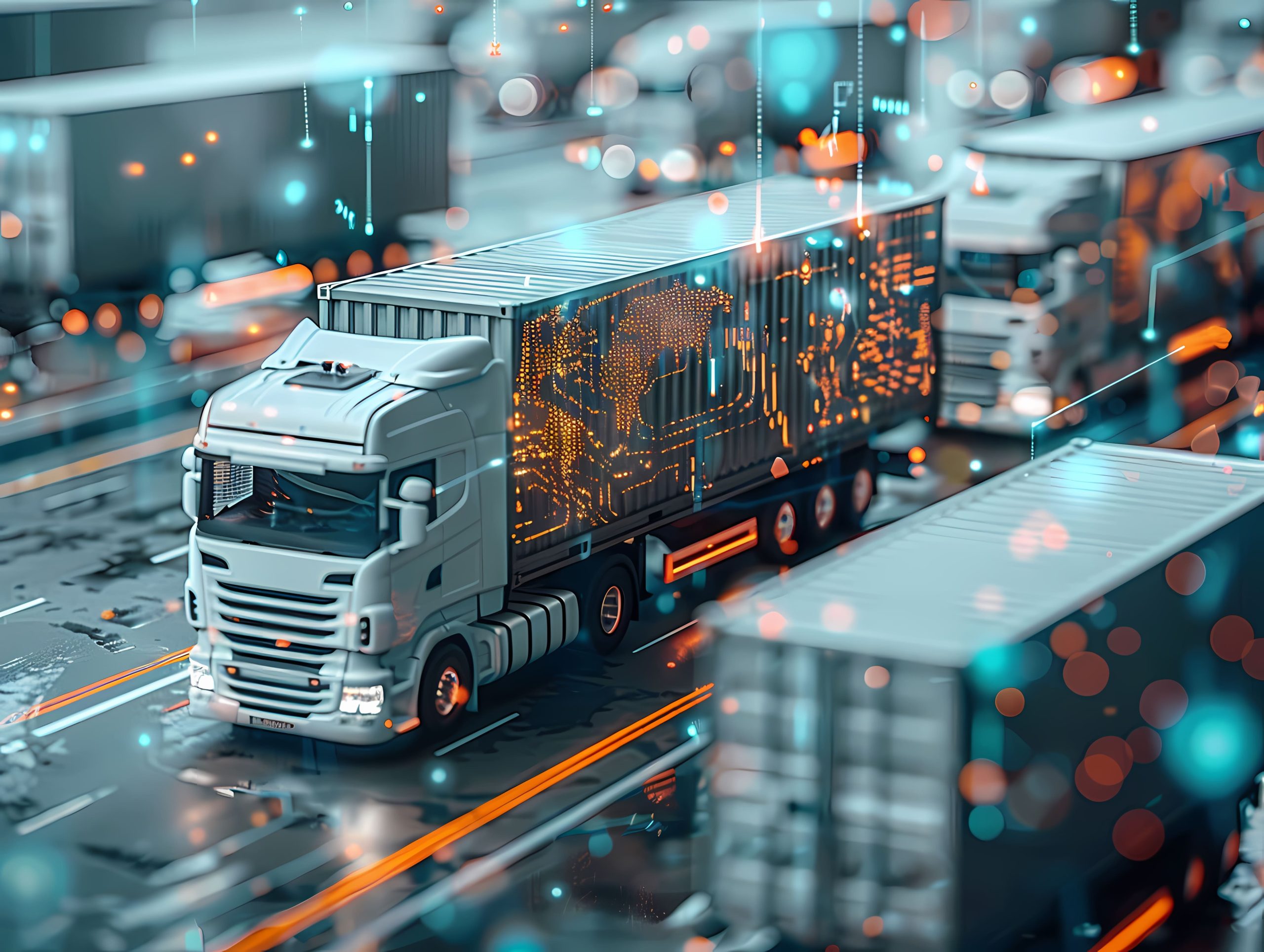
ArtificiaI Intelligence (AI) is redefining European logistics, improving efficiency, costs, and sustainability. The White Paper ‘AI in Logistics shows, through real cases from the ALICE network, how applications based on perception, reasoning, and action are already transforming ports and transport, confirming AI as a strategic pillar of the sector.
In recent years, Artificial Intelligence (AI) has gone from being a futuristic concept to becoming a key topic at conferences, in publications and in specialised forums. Recent advances in generative AI are transforming the global economy, with examples such as ChatGPT, which is already part of our daily lives, and Midjourney, which is revolutionising image creation. In Europe, regulation is also advancing: the EU AI Act (European Parliament, 2023) seeks to ensure the ethical and safe use of this technology by establishing principles of transparency and accountability.
In the logistics sector, AI is emerging as a strategic tool for optimising processes, reducing environmental impact and improving decision-making. According to Accenture (Lagunas & Riedl, 2022), 86% of operations managers consider AI essential to achieving their growth objectives, and 40% of supply chain managers rank it as their second technological priority, behind only the cloud. Logistics is fertile ground for AI: it requires data and generates enormous volumes of information, as well as operating in complex and dynamic environments. Transport, which accounts for 5% of European GDP and 25% of greenhouse gas emissions, is an ideal field for applying AI and achieving substantial improvements.
The White Paper ‘AI in Logistics’ (Murrenhoff et al. 2024) explores how this technology is revolutionising the sector, from its fundamentals to real-world cases. Machine learning, one of the pillars of AI, enables systems to learn from data and improve their predictions without explicit programming. There are three main approaches: supervised learning, which trains models with known examples; unsupervised learning, which discovers patterns without labels; and reinforcement learning, which learns through trial and error, receiving rewards or penalties based on its actions.
Applications in logistics are grouped into three main categories: perception, reasoning and action. Perception refers to solutions that collect information from the environment using sensors and data analysis; reasoning encompasses systems that process and analyse data to make intelligent decisions; and action comprises technologies that perform physical tasks using robotics and automation. The examples illustrating these categories are not theoretical, but real projects carried out by members of the ALICE network, which leads innovation in transport and logistics at European level.
In terms of perception, projects such as Captain AI use artificial intelligence and radar to improve navigation and avoid collisions in port environments, while 5G-LOGINNOV applies computer vision to detect the status of seals on containers and transmit video in real time thanks to 5G networks. In reasoning, the E2RM project by Fundación Valenciaport predicts the availability of emptycontainers in depots, reducing unnecessary movements and costs, and TOOL forecasts traffic conditions to optimise routes and just-in-time deliveries. In action, initiatives such as SWARMPORT simulate nautical processes in ports with multi-agent models to reduce layover times, while EMONS uses reinforcement learning and neural networks to minimise empty kilometres through intelligent planning in land transport.
Los beneficios son evidentes, pero implementar IA no es sencillo. El White Paper destaca cuatro claves para empezar: abordar proyectos pequeños y escalarlos progresivamente; combinar conocimiento técnico y de negocio; garantizar datos de calidad y cantidad suficiente; y definir recursos de software y hardware, valorando opciones en la nube para reducir costes iniciales. Además, el IA Design Canvas desarrollado por Piest et al. (Piest, Iacob & Wouterse, 2022) propone una metodología para conceptualizar proyectos IA, estructurada en tres capas: conceptual, que define la idea y objetivos; fundacional, que establece funciones cognitivas y métricas; y de soporte, que aborda aspectos éticos, legales y técnicos.
The conclusion is clear: AI is not an option, but a strategic necessity for the logistics of the future. Its potential to improve efficiency, sustainability and competitiveness is enormous, provided that the challenges are addressed with planning and collaboration.
References
- EMURRENHOFF, Anike et al., 2024. AI in Logistics. White paper. Available at: https://www.etp-logistics.eu/alice-white-paper-ai-in-logistics/ [Accessed: 30 January 2026].
*Disclaimer: This English version has been generated with the support of AI-based translation tools. In case of discrepancies, the Spanish original prevails.