
Smart port security: drones as a key component
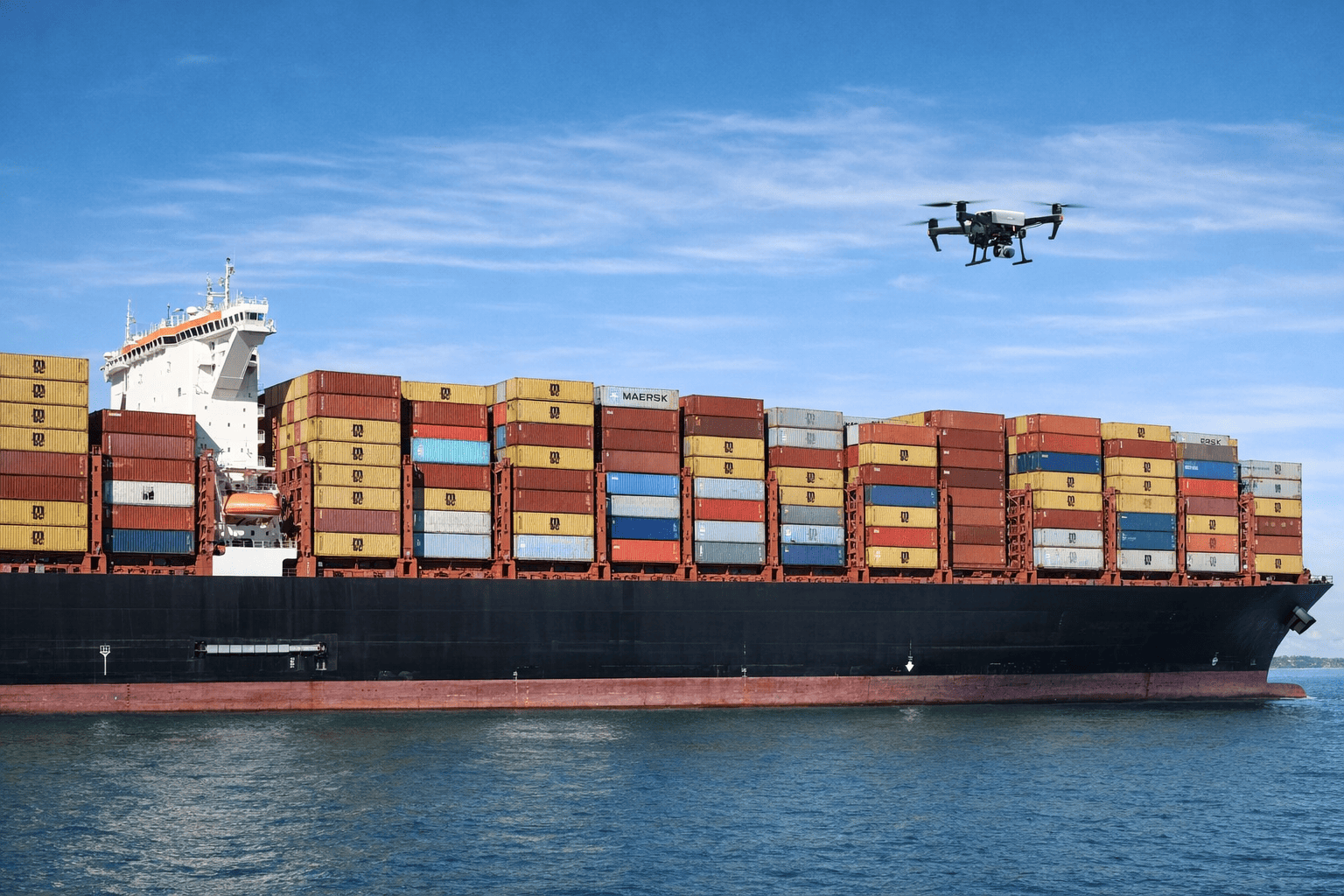
In recent years, advances in unmanned vehicles, whether airborne (UAV), maritime surface (USV) or submarine (UUV), have radically transformed the way we understand surveillance and security. Their incorporation into port environments, areas that are particularly sensitive due to their economic and strategic impact, not only seems inevitable, but absolutely necessary. The current landscape shows that these technologies have become essential tools for addressing the challenges in the protection of critical infrastructure.
Ports concentrate an enormous volume of activity: goods transit, people movement, logistics operations and constant ship traffic. Added to this operational complexity are threats such as smuggling, illegal immigration, theft and even terrorism. Traditionally, surveillance relied on fixed systems such as cameras, radars, etc., which, although they continue to play an important role, have clear limitations in terms of coverage, response speed, and operating cost.
It is in this new context that unmanned vehicles offer a qualitative leap forward. UAVs are capable of covering large areas in minutes, obtaining images in real time, and accessing areas that are difficult to monitor. USVs, for their part, patrol docks, access channels and interior areas of the port with state-of-the-art sensors, detecting anomalies, thermal traces or unauthorised vessels. Even UUVs are involved in underwater inspections that previously required specialised divers, reducing human risks and speeding up control processes.
All in all, the current situation shows exponential growth in the use of these vehicles. Many port authorities are already incorporating them for perimeter surveillance, monitoring environmental incidents, inspecting submerged infrastructure and monitoring maritime traffic. In a scenario of increasing digitalization, drones are being integrated into port management systems that combine artificial intelligence, predictive analytics, and IoT sensors to create a comprehensive view of the environment. This interconnection makes it possible to anticipate risks and coordinate more efficient responses.
However, the expansion of these systems is not without challenges. The regulation of airspace and maritime space is still evolving slowly, creating operational uncertainties. Furthermore, the integration of drones into an environment as dynamic as a port requires precise protocols to avoid interference with manned aircraft, cranes, vessels, and personnel. Added to this is a deeper debate about privacy and ethics: to what extent is intensive surveillance justified to enhance security without resorting to intrusive practices?.
Despite these questions, it is clear that the benefits far outweigh the difficulties. The capacity for early detection is perhaps the most valuable aspect. A drone can identify a suspicious vessel before it enters the port area, monitor a polluting spill in real time, or locate a person in danger in a matter of seconds. In terms of cost, their operation is significantly cheaper than the continuous use of surveillance vessels or traditional aircraft.
Furthermore, unmanned vehicles expand response capabilities without increasing human risk. In extreme situations, such as inspection after an explosion, fire control or surveillance in adverse weather conditions, drones can operate where it would be dangerous to send personnel. Their versatility makes them allies not only for security, but also for sustainability and logistical efficiency.
The question is no longer whether ports should adopt these systems, but how to accelerate their integration in a responsible and strategic manner. Collaboration between authorities, port operators, technology companies, and regulatory bodies will be key to developing common standards, ensuring interoperability, and promoting a modern and effective security culture.
In conclusion, drones, in all their variants, are no longer a futuristic technology but have become an essential tool in port surveillance. Their importance will continue to grow as ports face more complex challenges in a globalised world. Investing in them is not just a technological decision: it is a commitment to the safety, competitiveness and resilience of infrastructures that support a large part of world trade.
References
- INTERNATIONAL ASSOCIATION OF PORTS AND HARBORS (IAPH). 2025. Cyber Resilience Guidelines for Emerging Technologies in the Maritime Supply Chain. Available at: https://issuu.com/portsandharbors/docs/iaph_cyber_resilience_guidelines_for_emerging_tech [Accessed: 28 January 2026].
*Disclaimer: This English version has been generated with the support of AI-based translation tools. In case of discrepancies, the Spanish original prevails.