
Autonomous ships in optimized logistics ecosystems
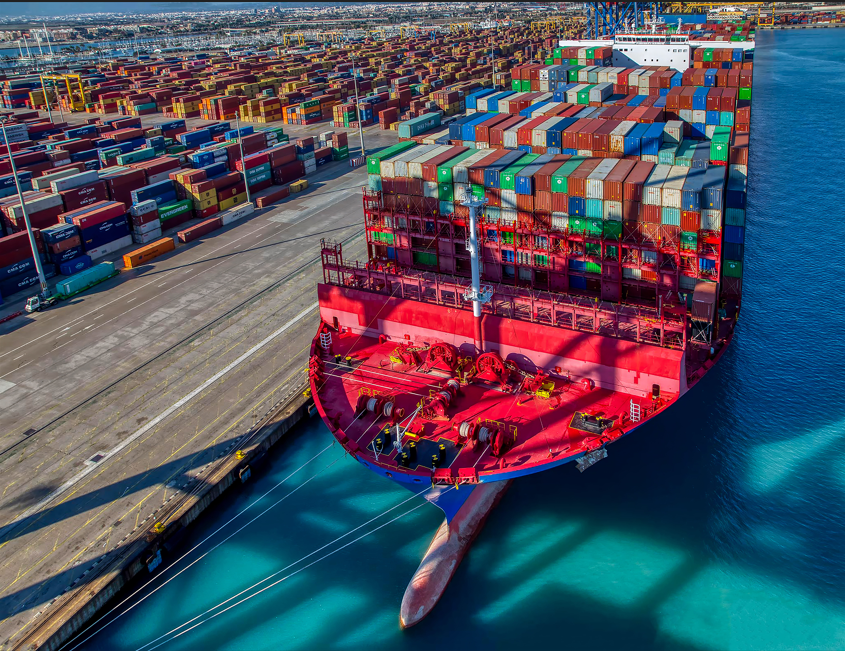
The study Autonomous Ships in Optimised Logistics Ecosystems: Strategic Models and Survey Insights, developed within the framework of the European SEAMLESS project, analyses how Maritime Autonomous Surface Ships (MASS) can be viably integrated into port logistics ecosystems. The study combines strategic models and survey results from stakeholders in the sector to identify opportunities, barriers and effects on shipowners, ports and operators, in a scenario characterised by greater demands for efficiency, safety and sustainability.
The push towards autonomous ships is changing the way we understand maritime transport and its place in increasingly demanding logistics chains. Today, there is a lot of talk about sensors, artificial intelligence and remote navigation, but when you talk to the sector, you discover that technology is only part of the story. The real question is whether we will be able to build viable business models that work in the reality of day-to-day port and logistics operations.
This more practical, down-to-earth perspective is precisely what inspired the study carried out as part of the SEAMLESS project, funded by the European Commission through the Horizon Europe programme. The objective is clear: to understand where we really stand in terms of business models for Maritime Autonomous Surface Ships (MASS), and what we can expect in the coming years, based on a global survey and interviews with key players who are currently leading the way.
The work is based on a solid empirical foundation. 436 organisations from around the world were contacted and 75 valid responses were ultimately obtained, providing a broad and diverse overview. These are not only technology companies or shipping companies. They also include port authorities, research centres, system suppliers, classification societies, associations and companies in the logistics chain. A clear trend can be seen in the geographical distribution. The United Kingdom, Norway, Germany, Belgium and Spain account for much of the activity, with projects, pilots and initiatives progressing at different rates but with a shared ambition. Taken together, this diversity of profiles confirms something that several interviewees repeated: an autonomous vessel is not a product, it is an ecosystem.
The results show that interest in maritime autonomy is no longer experimental. 79% of organisations identify it as a strategic area in their roadmap, and more than 80% have dedicated teams—albeit small, typically consisting of one to three people. The sector is now in a mature exploration phase. Organisations are not yet moving towards mass deployment, but they are actively understanding, testing and preparing. More than half are already working on business models, although only a third report having a defined one. This gap is logical, given the competitive and complex nature of the issue and its direct implications for costs, risks and operations.
The interviews add a very valuable layer. Those closest to development agree that the potential of MASS lies not only in operating without a crew, but in rethinking entire logistics processes. More efficient feeder services, more predictable port operations, more integrated intermodal chains, or even flexible on-demand services. For all this to happen, business models must respond to real problems: congestion, uncertainty in schedules, rising crew costs, operational risks, the need to improve safety and the pressure to reduce emissions. As one of the interviewees pointed out, autonomy ‘only makes sense if it solves a problem that cannot be solved in any other way today’.
As for the barriers, there is absolute consensus on the first point. Regulatory uncertainty remains the main obstacle. The lack of a clear framework on responsibilities, operational requirements or safety standards complicates any significant investment. Added to this are technological immaturity in critical areas—from advanced sensorisation to real-time decision-making—the costs of implementation, and cultural resistance that appears in many sectors when profound changes are proposed. The lack of specialised professional profiles and environmental concerns complete a set of challenges that require gradual progress.
The study also points out the factors that can accelerate adoption. The priority is to have clear regulation, demonstrable cost-benefit scenarios, and sufficiently mature technologies. Sector collaboration and professional training are important, although they are perceived more as supports than as triggers for change. Ultimately, MASS will advance if they provide real value and if the sector is confident that they can operate safely and profitably.
Finally, the cost-benefit analysis in the article offers an interesting insight into the expected impact. Shipowners and operators could reap significant benefits in terms of cost reduction and increased demand, although they will need to make a significant initial investment. Port authorities, for their part, will take on greater investments without immediate direct returns, while terminals could see operational improvements. Shippers will receive indirect benefits in the form of improved reliability and quality of service. This uneven distribution serves as a reminder that maritime autonomy will generate benefits, but not evenly, and that this asymmetry must be taken into account when designing business models that really work.
References
- LARA LÓPEZ, Jorge M. y MORA AYUSO, Aida, 2025. Autonomous Ships in Optimized Logistics Ecosystems: Strategic Models and Survey Insights. En: Journal of Physics: Conference Series, vol. 3123, art. 012047. Bristol: IOP Publishing. Available at: https://iopscience.iop.org/article/10.1088/1742-6596/3123/1/012047 [Accessed: 30 January 2026].
*Disclaimer: This English version has been generated with the support of AI-based translation tools. In case of discrepancies, the Spanish original prevails.