
Drop-in alcohol-based biofuel in ships: emissions assessment using GrenOl+
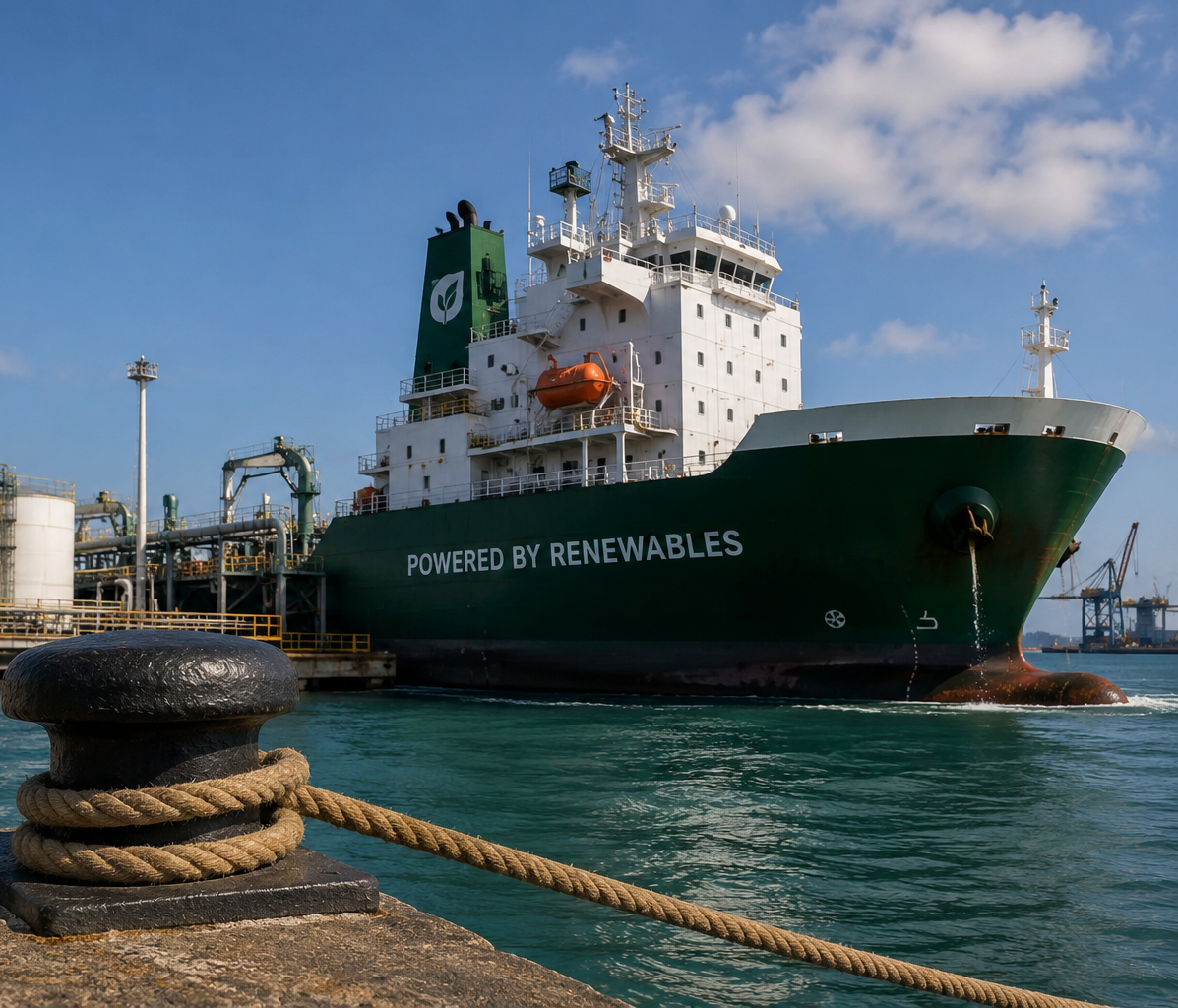
One highly promising option for decarbonising the maritime sector is the use of diesel-like fuels, commonly known as ‘drop-in’ fuels, which enable an energy transition without requiring significant investment in adapting ships or fuel supply systems.
Some of these fuels are of biological origin and their availability depends largely on that of the raw material from which they are produced. Therefore, any unconventional route that increases their potential offers a strategic advantage. In the case of fuels for engines using the diesel cycle, the most common options are fatty acid methyl esters (FAME) and hydrotreated vegetable oils (HVO), fuels with different characteristics but which share the raw material from which they are produced (oils and fats).
Consequently, the potential of these two options is not additive; rather, they compete with one another. Alcohols, on the other hand, are molecules that can be produced from other types of biomass (e.g. sugarcane), so their introduction as marine fuel would indeed increase the potential of biofuels for the sector. Although the use of short-chain alcohols (methanol and ethanol) is already common, they cannot be considered drop-in fuels, as they require specific engines. However, longer-chain alcohols (from hexanol onwards) have the advantage of having characteristics more similar to diesel fuels, meaning they can be used with minimal modifications to vessels
This study analyses the use of GrenOl+, an advanced biofuel composed of short- and long-chain alcohols, blended with marine diesel fuel as an alternative to reduce the atmospheric impact and carbon footprint of the maritime sector. The experiments were carried out in the Port of Valencia (Spain) on a vessel equipped with a 186 kW compression-ignition engine operating at different loads.
Firstly, a blend consisting of 80% marine diesel fuel and 20% GrenOl+ (by volume) was selected on the basis of its physical and thermochemical properties. This blend had a lower calorific value than pure diesel fuel, which increased specific fuel consumption.
Various fuel parameters related to its storage and subsequent use as engine fuel were analysed, such as its hygroscopicity, flash point and cetane number. Subsequently, tests were carried out under real operating conditions at different engine speeds.
Given the characteristics of this type of application (propeller connected to the engine), this means that the power delivered by the engine remained constant once the speed was set. This latter aspect allowed for a fair comparison between marine diesel and the blend selected with GrenOl+, as the same engine operating conditions were evaluated for both fuels. The study compared particulate emissions and other gaseous emissions (CO₂, CO, HC and NOx).
The results obtained indicate that, in the context of the decarbonisation of the maritime sector, GrenOl+ may be a technically viable and sustainable alternative in the short to medium term as a direct replacement fuel for blending with marine diesel. This approach minimises retrofitting costs and offers a significant reduction not only in net CO₂ emissions compared to conventional fuels (whilst maintaining very similar tailpipe CO₂ emissions), but also in particulate emissions.
Although NOx emissions worsen slightly at high loads, this drawback could be easily resolved by modifying engine settings (injection timing) on existing vessels and/or incorporating low EGR rates in new developments.
Finally, the study proposes a number of measures to mitigate potential technical issues arising from the mixtures’ high hygroscopicity, low flash point and low cetane number, which could arise should this biofuel be widely used in ports.
References
- Ventin, P., Hernández, J. J., Gómez-Doménech, D., Sanz-Argent, J., & Lapuerta, M. (2025). Emissions assessment of a vessel using a sustainable alcohol-based fuel produced by catalytic conversion of bioethanol. Fuel. https://doi.org/10.1016/j.fuel.2025.135398
*Disclaimer: This English version has been generated with the support of AI-based translation tools. In case of discrepancies, the Spanish original prevails.