
Towards green shipping routes in the Mediterranean
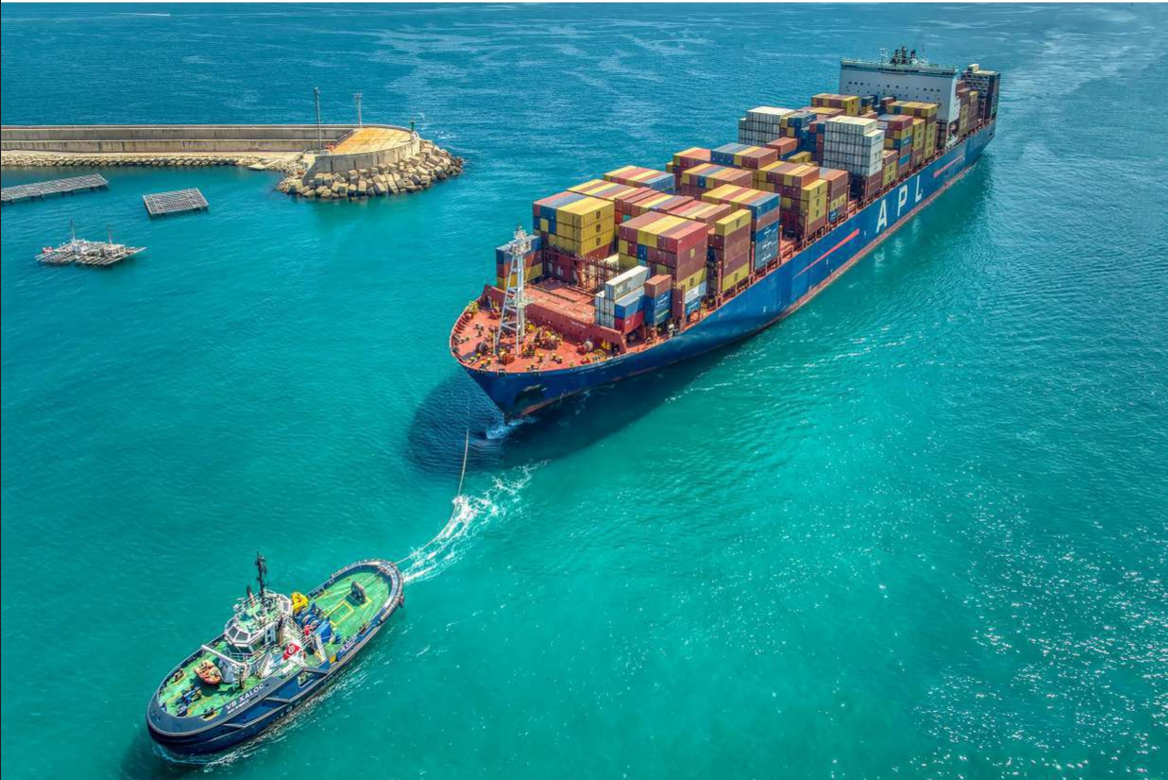
Formulating green shipping pathways for a clean energy transition in the Mediterranean: framework and insights, developed within the framework of the European GreenMED project, sets out a roadmap for advancing the decarbonization of maritime transport in the Mediterranean, based on an analysis of the fleet and the main port hubs.
In an increasingly demanding regulatory environment, the maritime industry faces the challenge of advancing its energy transition towards low-carbon fuels in order to reduce the sector’s emissions. In this regard, the sector needs tools to assess the technical and economic viability of different fuels for decarbonization, facilitating the gradual adoption of cleaner options.
Within this framework, this study takes a step forward in the development of a tool that allows for the evaluation of the applicability of different decarbonization routes in a given region based on the calculation of the energy demand of the fleet operating in the area. This methodology makes it possible to determine the current energy demand per ship, route and port hub, helping to construct different energy transition roadmaps and assessing the use of various low-carbon fuels. In particular, this study provides a basis for the Mediterranean region within the framework of the European GreenMED project.
Initially, the methodology requires the delimitation of important variables such as the space, the fleet and the fuels under study. In particular, the Mediterranean basin is considered as the space to be analysed, including ships with a significant presence and a gross tonnage of more than 500 GT for the reference year (2022). This ensures a better estimate of energy demand by considering all established vessel types, in accordance with the methodology established by the International Maritime Organisation (IMO, 2020).
With regard to fuels, consideration is given to conventional marine fuels (HFO, MDO, LSFO), transitional fuels (with LNG as the main representative) and alternative fuels that enable savings of more than 70% in life-cycle emissions compared to the reference value established in European Union (EU) Regulation 2023/1805.
This approach assumes that different combinations of alternative fuels will not dominate the fleet’s energy demand due to their limited technological maturity and deployment.
The methodology quantifies and locates the current energy demand of ships in the region studied and, in parallel, characterises the fuel supply chains (current and planned). To do this, five main steps are followed:
- Fleet analysis and definition of energy demand: consumption and emissions are modelled at ship level, segmented by type and size, in accordance with the provisions of (IMO, 2020) and based on operational profiles derived from traffic data. The results are calibrated against national supply statistics.
- Definition of energy hubs and analysis of their profile: the main port and fuel supply nodes are identified, characterised by their volume, type of traffic, energy infrastructure and potential for adopting alternative fuels.
- Allocation of points for bunkering: based on traffic data, ship-to-ship supply operations are geolocated and assigned to the corresponding hubs. The total volume of fuel transferred is estimated based on typical characteristics of the operations, verifying its consistency with the determined demand.
- Identification of ship patterns and route characteristics: typical routes between hubs are reconstructed and consumption indicators are obtained by route, ship type and size, associating demand with specific corridors.
- Scenarios and energy transition: based on the baseline scenario, the demand for alternative fuels is projected under different transition scenarios (STEPS, APS, NZE) established by the International Energy Agency (IEA, 2021), calculating its annual evolution based on fleet growth and renewal and the expected availability of fuels.
Based on this methodology, the study shows an initial set of results, identifying the countries with the largest supply of marine fuel, led by Spain, Gibraltar (UK), Italy, Malta and Greece, which account for most of the bunkering in the Mediterranean. Similarly, it can be seen that the main supply points coincide with the ports with the highest traffic, with those with more than 500 calls and 10,000 tonnes of cargo handled being considered in the analyses.
On the other hand, some 17,000 ships have been identified according to the filters established to define the operational fleet in the Mediterranean basin, which currently consumes predominantly HFO and MDO, with an incipient use of LNG.
Special attention should be given to container ships, bulk carriers and Ro-Pax, as well as ships with defined operating routes, which account for a significant part of energy demand. This information serves as a starting point for defining scenarios with different low-carbon fuels, providing a tool for decision-making on planning and strategies for energy transition to shipping companies, ports and users in general.
References
- ANNETIS, Manolis et al., 2025.Formulating Green Shipping Pathways for a Clean Energy Transition in the Mediterranean: Framework and Insights. In: Innovations in Sustainable Maritime Technology — IMAM 2025. Cham: Springer. Available at: https://link.springer.com/chapter/10.1007/978-3-032-01620-1_11 [Accessed: 30 January 2026].
*Disclaimer: This English version has been generated with the support of AI-based translation tools. In case of discrepancies, the Spanish original prevails.