
Foreign trade: who exports from Spain
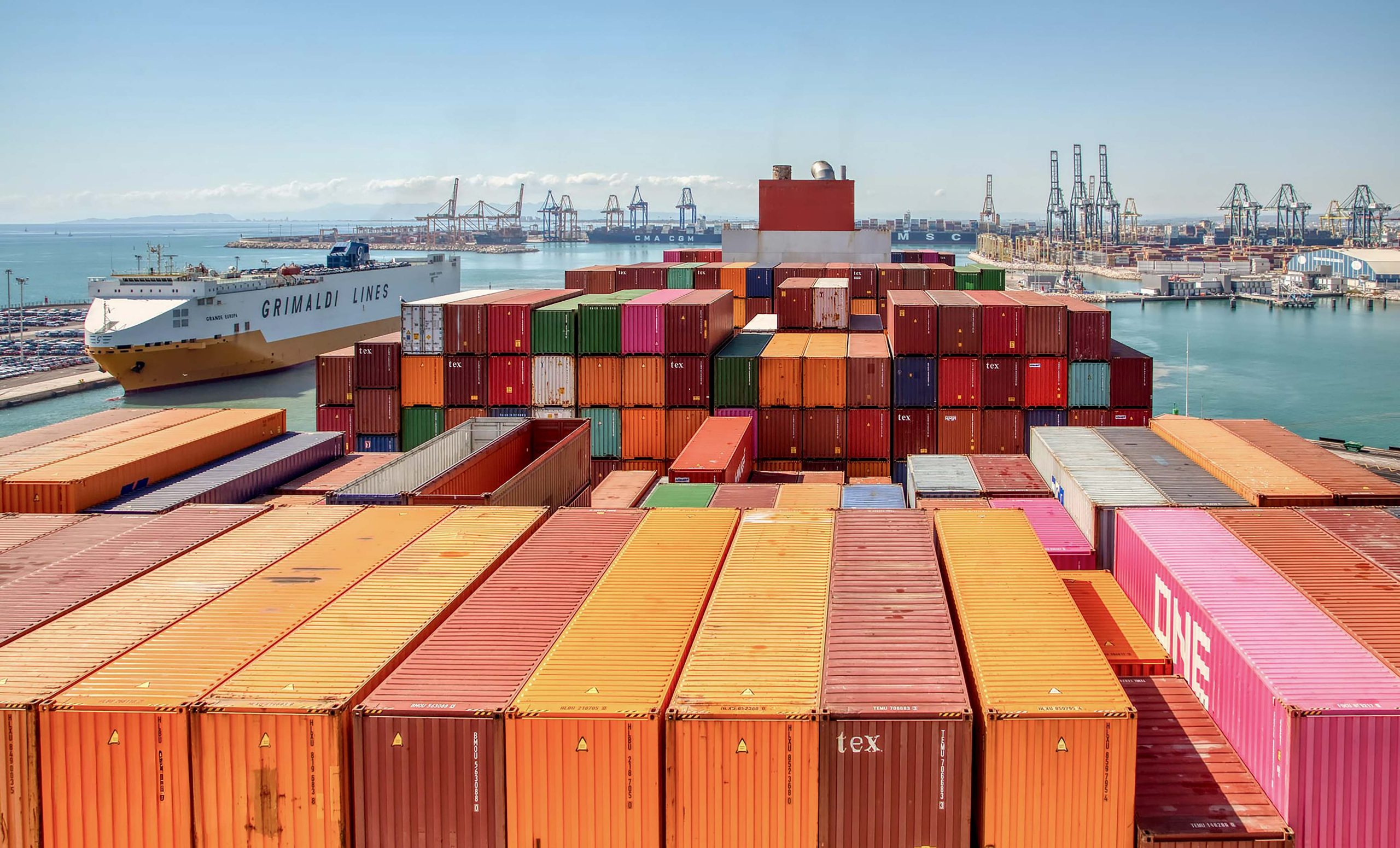
Spanish exports in the first half of 2026 totalled 201,133 million euros, according to foreign trade statistics published by the Spanish Tax Administration Agency (AEAT), representing a 2 per cent increase compared with the same period the previous year and bringing the figure very close to its peak, recorded in 2023 (201,456 million euros).
The energy sector plays a very significant role in this growth, contributing 2.8 percentage points to the year-on-year rate of change, followed by electrical appliances and clothing (0.6 and 0.5 percentage points, respectively). By contrast, key sectors such as pharmaceuticals, aircraft and meat products have performed poorly over this period, contributing -1.3, -0.9 and 0.5 percentage points to the growth rate, respectively.
The aim of this article, however, is not to characterise export growth from a sectoral perspective, but rather to analyse the export base behind it and the structure of Spain’s foreign trade sector. In this regard, and according to the information available in the ‘Export Profile of Spanish Companies’, published by the National Institute of Foreign Trade, the Spanish export base as at July 2026 stood at 123,762 companies, of which only 52,252 (42 per cent) can be considered regular exporters, that is, those that have carried out export operations for four consecutive years.
This initial figure already points to a highly heterogeneous export base, which is fully confirmed by analysing the data in terms of relative export volumes. Of the total of 123,762 companies, the vast majority—86,812—have carried out transactions worth less than 50,000 euros, accounting for 0.1 per cent of total exports. In other words, 70 per cent of operators account for barely 0.1 per cent of overseas sales. In contrast, 5,418 companies (4 per cent of the total) account for 88 per cent of exports.
At the very top of the pyramid are the 96 companies that export goods worth more than 250 million euros a year and which, on their own, account for 35 per cent of our sector’s total exports.
Therefore, the Spanish export base exhibits a marked dual structure, in which a large number of companies that export very little and irregularly coexist alongside a much smaller group of companies that export regularly and account for the bulk of exports (Elcano, 2018), a situation consistent with the structure of the Spanish economy itself and with the trade patterns of other European Union countries.
Indeed, if we analyse the data published by the European Statistical Office, EUROSTAT, for the European Union as a whole, 68 per cent of exporting companies in 2024 had fewer than 10 employees, and this percentage rose to 90 per cent when the threshold was raised to 50 employees; these figures are similar across the main EU countries.
In terms of volume, in line with the previous point, these companies accounted for only 17 per cent of exports. Once again, large companies (more than 250 employees) are the driving force behind the EU’s external trade (67 per cent of total exports in 2024).
As mentioned, this high presence of micro-SMEs on the international stage is closely correlated with the structure of the economies themselves; in the case of Spain, moreover, many companies hold back their growth just short of the threshold to avoid falling under a more stringent regulatory regime, and thus the regulation itself incentivises the current distribution (Camara, 2026).
The fact is that, in the field of exports, size does matter. Various studies in fact suggest that size is the most important determinant for the internationalisation of firms, given the higher productivity of large firms and their greater capacity to cope with the fixed costs of foreign trade (Domenech, 2012, BBVA Research). However, the financial and structural aspects are just one of the barriers to entry faced by firms embarking on their international venture.
If we exclude companies which, due to the nature of their product, do not consider exporting as a viable long-term option, and according to the Spanish Chamber of Commerce’s report on the regulatory environment and SMEs (2026), a significant proportion of occasional exporters identify size as their main barrier to continuing their overseas activity; as already mentioned, this circumstance is often linked not to criteria related to the commercial activity itself, but rather to regulatory and management issues. For this group, collaboration and collective action could be a promising avenue for increasing the efficiency of their international operations.
For companies that do not face the obstacle of size, bureaucratic complexity, a lack of necessary knowledge of both the target market and the internationalisation process itself, or insufficient financial resources are the main barriers cited for exporting, which have a more marked influence on sporadic exporters than on regular ones.
In fact, there is currently a very wide range of trade support instruments designed to help companies overcome these barriers, whether through staff training, advice, financing schemes or risk coverage; however, the reality is that what is standard practice for regular exporters does not extend equally to the rest.
The challenge, therefore, facing the foreign trade sector if it is to expand its export base is to ensure that these kinds of instruments are made available to as many companies with the potential to expand internationally as possible, thereby enabling the benefits of opening up new markets to be shared by the majority of the business community.
References
- MONTHLY FOREIGN TRADE REPORT, JUNE 2026. Government of Spain. First Vice-Presidency of the Government. Ministry of Economy, Trade and Enterprise https://comercio.gob.es/ImportacionExportacion/Informes_Estadisticas/Documents/informe-mensual/Informe-Mensual-de-Comercio-Exterior-ultimo-periodo.pdf. [Accessed 18 September 2026].
- SPANISH TAX ADMINISTRATION AGENCY (AEAT): https://sede.agenciatributaria.gob.es/Sede/estadisticas/estadisticas-comercio-exterior.html. [Accessed 18 September 2026].
- PROFILE OF THE SPANISH EXPORTING COMPANY (ICEX, 2026): https://informesestadisticos-est.icex.es/InformesComerciales/parametros_multiselect.jsp?TipoInforme=1. [Accessed 18 September 2026].
- EUROSTAT (2026): https://ec.europa.eu/eurostat/databrowser/explore/all/external?sort=category&lang=en&subtheme=ext_go.ext_tec&display=list. [Accessed 18 September 2026].
- EUROSTAT: https://ec.europa.eu/eurostat/statistics-explained/SEPDF/cache/65102.pdf. [Accessed 18 September 2026].
- REAL INSTITUTO ELCANO: https://www.realinstitutoelcano.org/comentarios/tendencias-e-incertidumbres-del-comercio-exterior-espanol/. [Accessed 18 September 2026].
- Correa-López, M. and Doménech, R. (2012), The internationalisation of Spanish companies, Working Paper 12/29, BBVA Research. https://www.bbvaresearch.com/wp-content/uploads/2015/12/PPT_Taman%CC%83o-e-Internacionalizacio%CC%81n-Sevilla-3dic2015_ESP.pdf. [Accessed 18 September 2026].
- Spanish Chamber of Commerce (2026), Business growth and good regulatory practices for improving the environment for Spanish SMEs. [Accessed 18 September 2026].
*Disclaimer: This English version has been generated with the support of AI-based translation tools. In case of discrepancies, the Spanish original prevails.