
How much electricity must be produced to have renewable marine fuels?
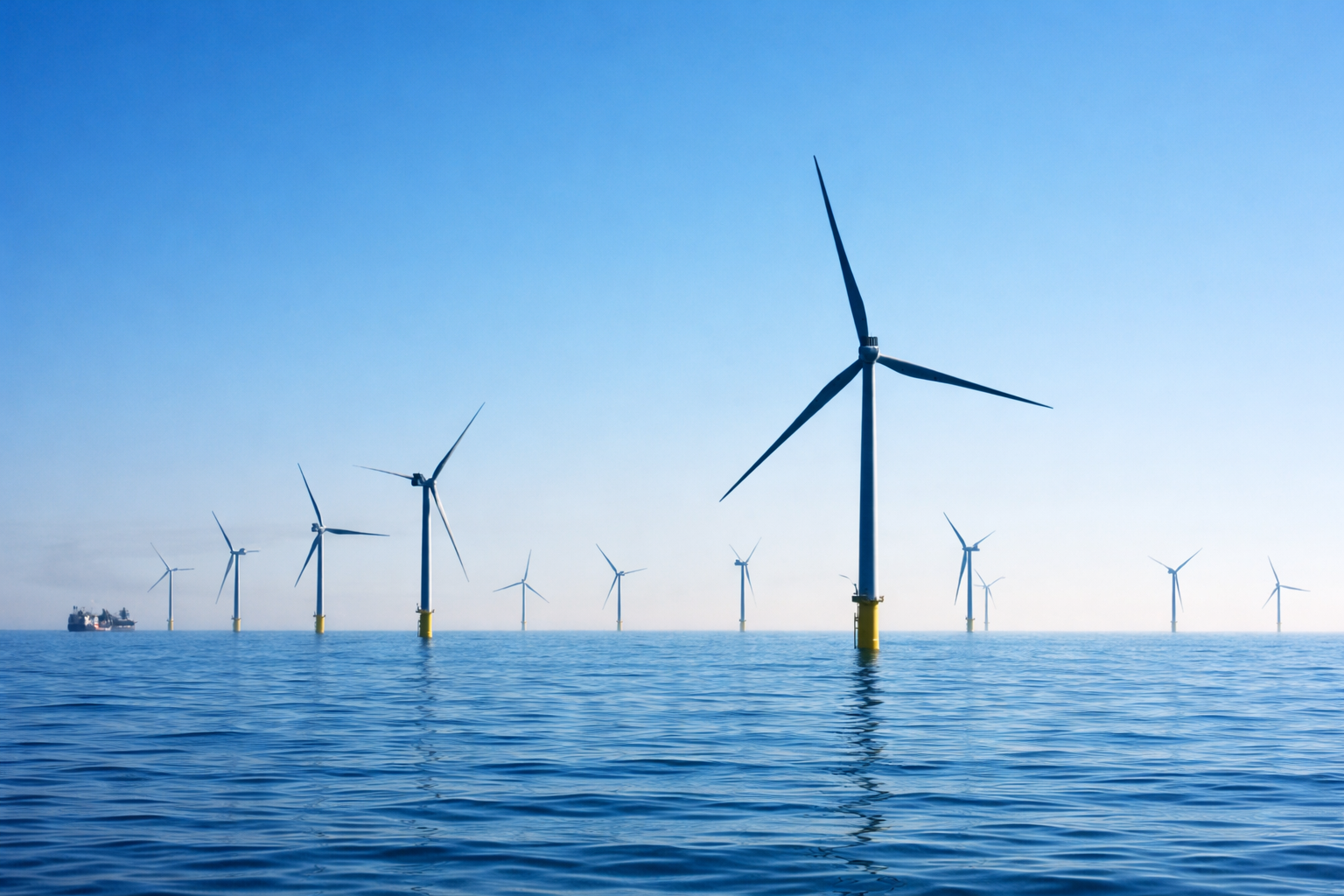
The energy transition will require substantial amounts of electricity, and this study provides a rough estimate of the electricity needed for Spain’s marine fuel supply to be based entirely on renewable marine fuels.
The main aspect of the energy transition is the replacement of fossil fuels with renewable energy sources. The available renewable options include the use of biofuels, the production of renewable electricity, and the production of synthetic fuels using renewable electricity. The availability of the first of these options (the incorporation of biofuels) largely depends on the existence of suitable feedstocks, such as organic waste or energy crops.
It should be noted that the potential availability of acceptable raw materials as biomass for energy use is limited, so a realistic energy transition will largely rely on the other two options: the use of pure electricity options and the consumption of synthetic fuels, such as hydrogen, ammonia or methanol.
Both options require electricity, so the first step in carrying out an energy transition process is to increase the capacity for renewable electricity production. Therefore, from a planning perspective, it is necessary to consider how much electricity will be needed to carry out this process, whether that amount is realistic, and how to implement this electricity production.
In this regard, and with the maritime sector in mind, a useful exercise to illustrate the scale of the challenge is to address the following question: how much renewable electricity would need to be produced in Spain to replace all the marine fuel currently supplied in its ports?.
The amount of fuel supplied to ships (commonly referred to as bunkering) within the network of ports of general interest is around 12 million tonnes per year (Puertos del Estado 2024). This includes residual fuels, refined fuels and liquefied natural gas, while other marine fuels are supplied in much smaller quantities. For an approximate calculation, it is reasonable to assume that these fuels contain 11.5 MWh/t of energy, which means that, at present, 138 TWh are supplied in bunkering of fuels.
The resulting figure seems very significant, although to get an idea of its magnitude, it is interesting to compare it with a reference value, such as the demand for electricity in Spain. Currently, this value stands at around 240 TWh (Red Eléctrica Española 2024), which implies that the amount of energy supplied in bunkering operations is more than half of all the energy consumed in the form of electricity in Spain.
On the other hand, it should be borne in mind that the production of synthetic fuels requires more energy than they contain, due to losses in the production processes. In a basic initial analysis, it can be assumed that the future of the maritime sector, after the energy transition, will be dominated to a large extent by the use of green ammonia as a fuel.
The production of 1 tonne of green ammonia requires 10.6 MWh of renewable electricity (Green Ammonia Working Group 2024), while it contains 5.6 MWh. In other words, each MWh of fuel produced requires 1.9 MWh of electricity. This means that, in order to produce all the fuel currently supplied for bunkering, it would be necessary to produce around 260 TWh of renewable electricity exclusively for fuel production, a figure that exceeds the demand for electricity throughout the country.
Although this is a frightening figure, in reality, it only indicates that a lot of work will be necessary in the coming years, and it is not an unattainable value. To confirm this, it is useful to calculate the space that would be needed to produce that energy with photovoltaic parks. Assuming a production in Spain of 400 kWh per m2 per year (Land Art Generator 2009), the total area required would be around 650 km2, or 0.13% of Spain’s surface area.
Comparing this with other uses such as agriculture, which uses 33% of total land (The Officer 2025), it can be concluded that land availability would not be the main obstacle to this transition process, especially considering that there are approaches such as agrophotovoltaics that allow the two uses to be combined.
References
- GREEN AMMONIA WORKING GROUP. 2024. Green Ammonia Production. Available at: https://greenammonia.info/green-ammonia-production [Accessed: 14 January 2026].
- LAND ART GENERATOR. 2009. Total Surface area required to fuel the world with solar. Available at: https://landartgenerator.org/blagi/archives/127 [Accessed: 14 January 2026].
- PUERTOS DEL ESTADO. 2024. Anuario estadístico de Puertos del Estado.2024. Available at: Disponible en: https://www.puertos.es/ [Accessed: 14 January 2026]
- RED ELÉCTRICA ESPAÑOLA. 2024. Boletín de mensual de Red Eléctrica. Available at: https://www.ree.es/es/datos/publicaciones/boletines-mensuales/boletin-mensual-noviembre-2025 [Accessed: 14 January 2026].
- THE OFFICER. 2025. España pierde 70.000 hectáreas de tierra cultivada en 2024. Available at: https://theofficer.es/espana-pierde-70-000-hectareas-de-tierra-cultivada-en-2024/ [Accessed: 14 January 2026].
*Disclaimer: This English version has been generated with the support of AI-based translation tools. In case of discrepancies, the Spanish original prevails.