
Leading port innovation ecosystems: Rotterdam and Valencia
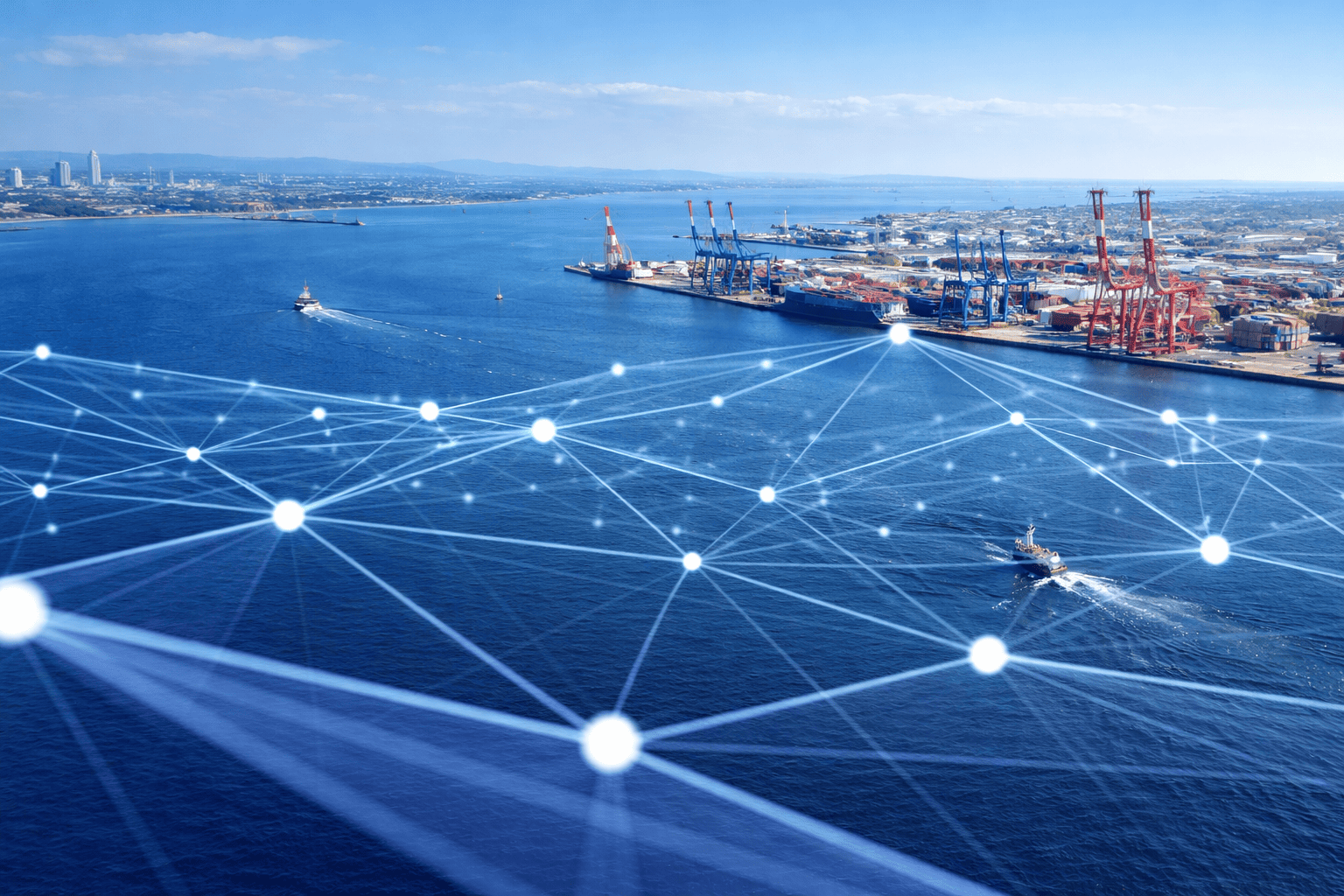
Ports are currently at the centre of some of the major economic, technological and environmental transformations of our time. The energy transition, digitalization, the circular economy and growing urban pressure are forcing ports to reinvent themselves in order to continue to be drivers of development and value creation for society. In this new scenario, ports no longer act solely as logistics nodes, but take on a key role as energy hubs and, in the most advanced cases, as true hubs of innovation and knowledge. The article “Innovation ecosystems in ports: a comparative analysis of Rotterdam and Valencia” addresses this evolution by applying the concept of innovation ecosystems to the port sector and comparing the cases of Rotterdam and Valencia in depth.
Innovation in ports, as in many other areas, cannot be understood as the result of isolated actions by individual companies, but rather as the product of a complex ecosystem in which multiple actors—companies, port authorities, research centres, universities, public administrations and start-ups—interact under specific institutional and cultural frameworks. Therefore, in contrast to traditional approaches focused on internal R&D or indicators such as patents, it is appropriate to apply the concept of innovation ecosystem to the port context, adapting it to its particularities.
Ports face unique challenges. They are highly specialised clusters in logistics and industrial operations, largely dominated by subsidiaries of large multinationals whose decision-making centres and R&D departments are often located outside the port territory.
This limits local knowledge generation, but reinforces another key challenge: the ability to absorb, adapt and apply technologies developed in other sectors or regions at an early stage. Digitalization, automation, clean energy, new fuels, the circular economy and smart infrastructure management are areas in which ports must act quickly to maintain their competitiveness and social legitimacy.
On this basis, the paper develops a specific analytical framework for port innovation ecosystems, focusing on the notion of absorption capacity. This framework identifies the main components that enable a port to capture external knowledge, transform it into operational solutions and scale it up across the cluster.
These components include human capital formation, demand for innovation from leading actors, research cooperation, start-up incubation and acceleration services, and support for innovative projects through testbeds, laboratories and specific funding. All of this is influenced by environmental factors such as innovative cultureand the role of public administrations as regulators and promoters.
Based on this framework, a comparative analysis is carried out of the innovation ecosystems of the ports of Rotterdam and Valencia, two major European logistics hubs with clear ambitions in the field of innovation. The study is based on an exhaustive analysis of strategic documentation and interviews with key players from both ports.
In Rotterdam, the ecosystem is characterised by a distributed and strongly connected approach. There are multiple specialised institutions that act in a complementary manner: research cooperation platforms such as SmartPort, internationally renowned accelerators such as PortXL, technology laboratories such as RAMLAB or BlockLab, and close collaboration with prestigious universities. The port authority plays an active role as the orchestrator of the ecosystem, acting both as a project promoter and an early adopter of innovative solutions. In addition, the ecosystem is well integrated into international networks, which facilitates the attraction of talent, start-ups and external knowledge.
The case of Valencia shows a more centralised model, with the Valenciaport Foundation playing a particularly important role as the hub of the ecosystem. This entity brings together applied research, training, international cooperation and support for innovation in the port logistics- cluster. Over the years, it has promoted numerous R&D projects, contributed decisively to the training of human capital in the sector and served as a bridge between companies, administrations and European programmes. More recently, initiatives such as OpenTop seek to strengthen the connection between large companies and start-ups, promoting open innovation.
The analysis reveals important similarities between the two ports: in both cases, there is broad consensus on the strategic importance of innovation in addressing the transitions underway, and in both cases, the port authority plays a key role as a facilitator.
However, there are also significant differences. Rotterdam stands out for its diversity of actors and its more international and experimental orientation, while Valencia has a more concentrated structure that is dependent on a few central actors, which provides coherence but also certain limitations in terms of ambition and scale.
The article concludes that there is no single model for a port innovation ecosystem, but there are common principles: the need for a systemic approach, the importance of human capital and research cooperation, and the decisive role of port authorities as orchestrators. These conclusions offer valuable lessons for other ports that aspire to strengthen their innovative capacity and position themselves as key nodes in the economic and technological transitions of the 21st century.
References
- Mendes Constante, J., de Langen, P.W. & Furió Pruñonosa, S. Innovation ecosystems in ports: a comparative analysis of Rotterdam and Valencia. J. shipp. trd. 8, 18 (2023). Available at: Innovation ecosystems in ports: a comparative analysis of Rotterdam and Valencia | Journal of Shipping and Trade | Springer Nature Link
*Disclaimer: This English version has been generated with the support of AI-based translation tools. In case of discrepancies, the Spanish original prevails.