
Electrifying road freight: AFIR and the readiness of the grid
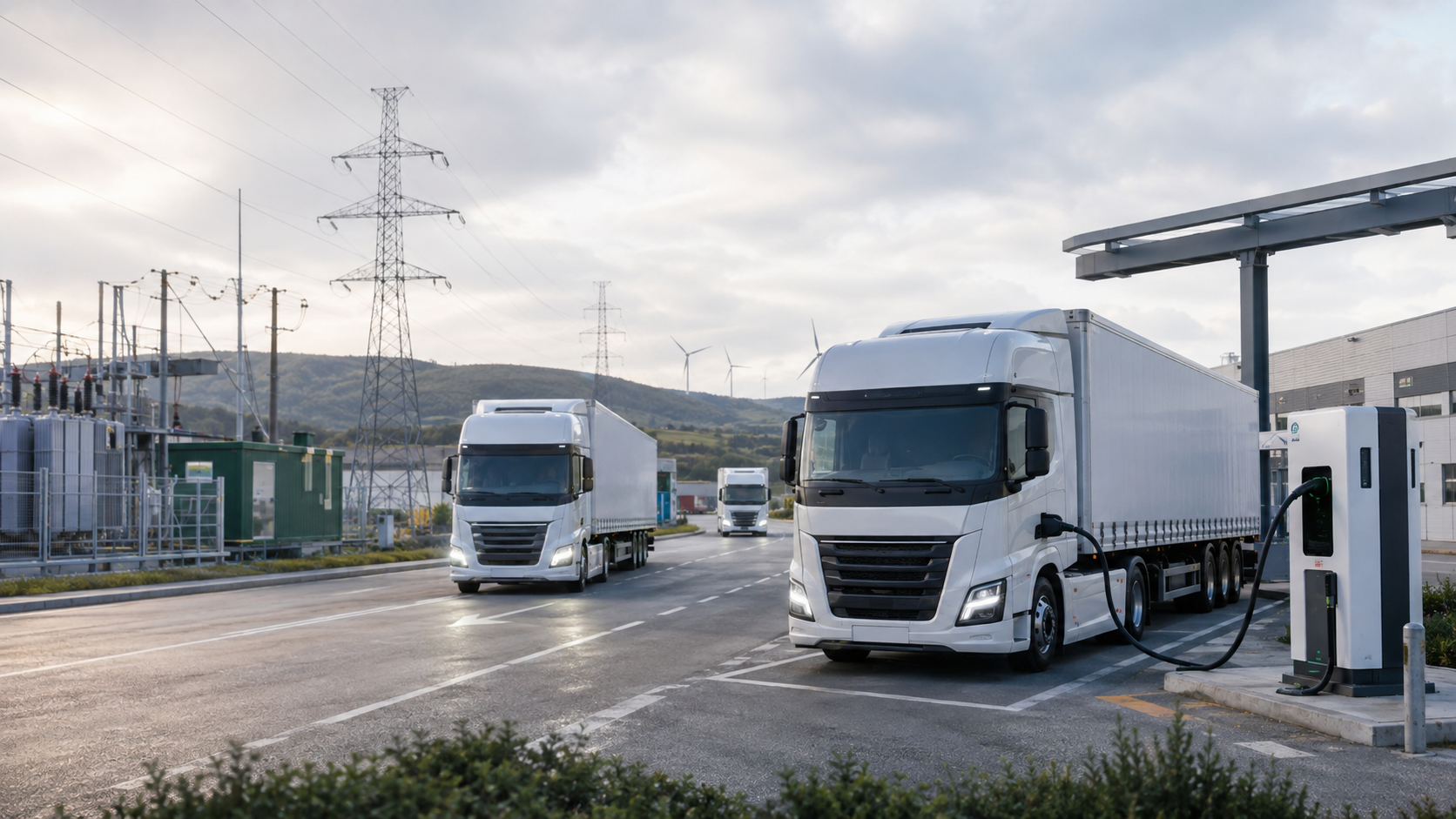
Electric trucks are no longer a pilot. Battery-electric heavy-duty vehicles are moving from demonstration to deployment across European corridors, and the numbers are climbing steadily as the CO2 standards for heavy-duty vehicles take effect. Yet the question that decides how fast this transition happens has quietly shifted. Two years ago, the industry’s focus was on the total cost of ownership (TCO) and the availability of charging infrastructure. Today, the most cited obstacle depends on the energy sector: getting enough power to the right place at the right time.
This shift emerged clearly from a stakeholder process that the ALICE Electrification Community, ran since April 2026 around the current review of the Alternative Fuels Infrastructure Regulation (AFIR), expected to be completed by the end of this year. AFIR is the EU’s main instrument for building a public recharging network for heavy-duty vehicle (HDV) along the Trans-European Transport Network (TEN-T), which directly affects port corridors and logistics hubs.
To prepare a shared, evidence-based contribution to the European Commission’s public consultation, ALICE brought together charging operators, truck manufacturers, grid operators, logistics companies, energy providers and researchers. Below are the main messages coming from the work done by this Taskforce on AFIR on the topics scope of the review:
- AFIR has worked, and the targets should remain as baseline. There is broad agreement that AFIR succeeded in creating a common European framework and a predictable minimum network. Almost no one wants the targets weakened. They give fleet operators the confidence that a truck bought today will find charging tomorrow, including across borders. The debate is now is whether they are sufficient or should be increased.
- The grid, not the target number, is the binding constraint. A charger can be installed in roughly a year. The grid connection needed to power a large charging hub often takes three to five years, sometimes more, with permitting adding further delay. This mismatch is where projects stall. Charging demand on busy freight corridors is expected to grow far beyond today’s minimum requirements as electrification advances, so the network must be planned ahead of demand of for the next 30 years. Charging infrastructure competes for grid capacity with industrial consumers, data centres, renewable energy projects and heat pump electrification. That means aligning infrastructure planning with grid planning, enabling anticipatory grid investment at locations where demand is clearly coming, and treating grid connection lead times as a policy priority.
- Depot charging changes the picture. Electric trucks are not diesel trucks with a plug. A large share of charging, on the order of 70 to 80 percent even for long-distance operations, is expected to happen at depots and logistics sites, often overnight and at lower power. This has direct consequences for ports, terminals and freight hubs, where the ability to charge on site, plan energy use and connect to the grid becomes part of the competitive offer. Depot and semi-public charging deserve more attention in policy and funding than they receive today.
- Megawatt charging matters, but so does matching power to need. For long-haul, Megawatt Charging Systems (MCS) will let a truck recharge within a mandatory rest break, and it should be recognised in the regulation’s technical standards. At the same time, pushing the highest power everywhere is not the best use of scarce capital. Power should match the dwelling time at each location: fast where trucks pass, slower where they rest.
- Financing and clarity are needed. Several contributors argued that raising binding targets without secured demand risks building sites that remain underutilized and deter private investment. The more promising path pairs the existing targets with financing tools, guarantees and risk-sharing measures that let operators build ahead of demand in a bankable way, supported by clearer rules on pricing transparency and interoperable data so that fleets can plan and compare across the network.
For the port and logistics community, the relevance is direct. Freight electrification is a coordination challenge that will reshape how multimodal chains are planned. Ports as multimodal hubs sit at the intersection of freight demand, grid capacity and land, which places them among the natural nodes where this transition succeeds or slows.
The message from this engagement process is clear. The regulation set the direction, and it worked. The next phase is about delivery: power, permitting, planning and investment, coordinated across the actors who needs to be aligned and seated at the same table. ALICE wants to bring an holistic, ecosystem driven viewpoint by turning shared experience into recommendations that help the sector move from ambition to deployment.
Who is ALICE
ALICE, the Alliance for Logistics Innovation through Collaboration in Europe, is the European Technology Platform for logistics recognized by the European Commission. Through a network of around 220 members across the freight and logistics value chain, ALICE brings together shippers, logistics service providers, transport carriers, infrastructure actors, technology providers, research organizations and public stakeholders. ALICE’s role is to translate research, innovation and operational experience into evidence-based, neutral recommendations supporting the decarbonization, digitalization and efficiency of freight transport in Europe.