
Towards enhanced port security: integration of advanced unmanned vehicle systems in port environments
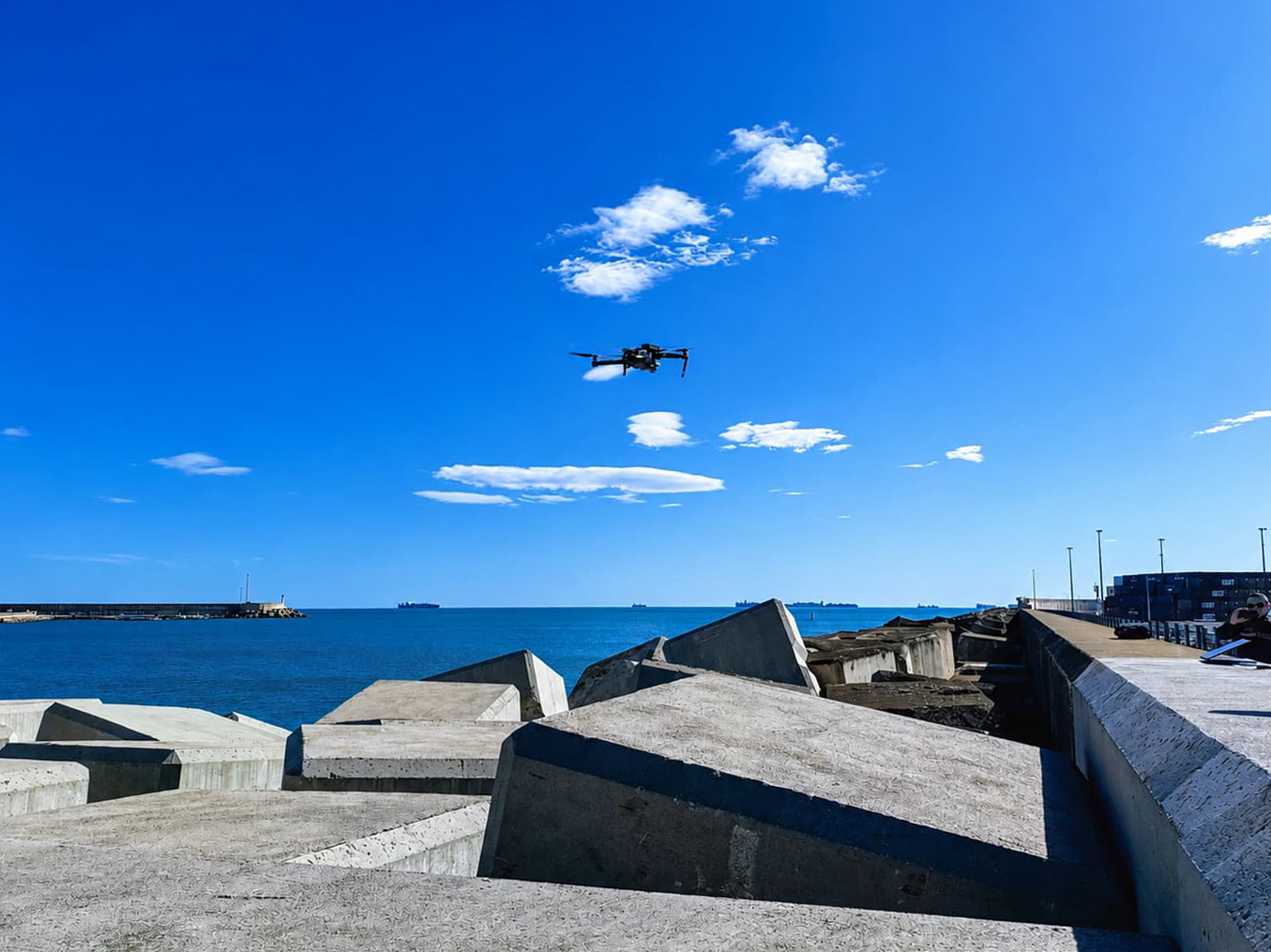
Security in port environments faces increasingly complex challenges, particularly in terms of underwater threats, where traditional surveillance methods prove insufficient to address them effectively. This article proposes the use of unmanned surface vehicles (USVs) combined with advanced sensors, capable of simultaneously monitoring the surface and the seabed, the validation of which in real-world conditions demonstrates a significant improvement in threat detection and operational efficiency within port infrastructure.
Problem, context and current solutions
Underwater threats in port environments represent a growing risk to maritime security and operational continuity. Traditional surveillance methods, such as diver inspections or fixed sensors, have important limitations in coverage, response time, and efficiency in dynamic maritime settings.
In this context, intelligent systems based on unmanned vehicles (USV, UAV, and AUV) are being developed, combined with advanced sensors such as sonar, cameras, LiDAR, and hydrophones, together with artificial intelligence techniques. These technologies enable more comprehensive monitoring across multiple domains (surface, air, and subsurface) and improve the detection of anomalous behaviour, particularly in relation to threats such as maritime smuggling and narco-submarines.
Proposed system: 5G-connected USV with integrated sensors
An unmanned surface vehicle (USV) was developed and tested at the Port of Valencia, connected to a 5G Standalone network that provides high bandwidth and low latency for real-time remote operations.
The system integrates sensors such as PTZ cameras for visual surveillance and 3D sonar for underwater detection, enabling simultaneous monitoring of the surface and seabed. The system architecture is based on ROS 2 and NVIDIA Jetson hardware, supporting sensor fusion, real-time processing, and continuous health monitoring of the platform.
5G infrastructure, testing and operational results
The Port of Valencia operates an advanced private 5G network that enables applications such as drones, IoT devices, and autonomous vehicles through network slicing. During trials, the USV recorded coverage parameters (SINR, RSRP, RSRQ), generating detailed connectivity maps of the port to optimize operations.
The system demonstrated effective performance in real-world conditions, including high-definition video transmission, emergency response support, and underwater inspection tasks. In controlled experiments, the sonar successfully detected simulated underwater objects, validating its detection capabilities in port environments.
Conclusions and future developments
The integration of USVs with 5G networks and advanced sensors significantly enhances surveillance and underwater threat detection in ports, improving both operational efficiency and security.
Future work focuses on incorporating artificial intelligence for sensor fusion, autonomous navigation, and anomaly detection, aiming to reduce human intervention and move toward fully autonomous and more resilient systems.
References
- Company, R., Higón, J. M., Laguna, A., Gabarda, M., Severinsen, D., Contorno, S., Pérez, F., & García, A. (2026). Advanced Unmanned Vehicle Systems for Port Security. Fundación Valenciaport.
*Disclaimer: This English version has been generated with the support of AI-based translation tools. In case of discrepancies, the Spanish original prevails.