
Education: the missing piece of the puzzle in maritime decarbonisation
Discussions on maritime decarbonisation are typically framed around technology and finance. Alternative fuels, renewable energy, shore power, hydrogen, artificial intelligence, digitalization and smart ports dominate policy agendas and investment strategies. Around the world, governments and industry are investing billions in infrastructure designed to accelerate the green transition.
This transformation is reinforced by an increasingly ambitious regulatory landscape. The International Maritime Organization’s 2023 Revised GHG Strategy has established a pathway towards net-zero emissions by or around 2050, while the European Union has complemented these ambitions through the Fit for 55 package, including FuelEU Maritime, the EU Emissions Trading System, and the Alternative Fuels Infrastructure Regulation. Together, these initiatives are reshaping both shipping and the role of ports within Europe’s industrial and energy transition.
Yet, despite unprecedented investment in technology, one critical enabling condition receives far less attention. Maritime decarbonization is no longer simply a technological challenge. It is equally organizational, institutional and human. Without the capacity to coordinate stakeholders, adapt governance arrangements and develop new competencies, even the most advanced technologies may fail to deliver their intended benefits.
This raises a more fundamental question: what has a port become? Traditionally viewed as gateways for trade, ports are evolving into complex socio-technical ecosystems where transport, energy production, industrial activity, digital infrastructure and environmental governance converge. They are increasingly expected to facilitate hydrogen and alternative fuel value chains, integrate renewable energy, support circular economy initiatives, strengthen industrial competitiveness and improve supply chain resilience.
At the same time, digitalization is transforming port operations and creating new forms of interdependence between infrastructure, information and decision-making. As ports become more interconnected, governance becomes more complex. Success depends not only on physical assets but also on collaboration among shipping companies, terminal operators, energy providers, technology developers, regulators, financial institutions, researchers and local communities. Increasingly, value is created through coordination rather than by individual organizations acting alone.
This evolution also changes the governance challenge. Traditional debates have focused on whether landlord, service or private governance models deliver greater efficiency. While these remain important, accelerating technological change, climate regulation and geopolitical uncertainty make another question increasingly relevant: which governance systems are most capable of adapting?
Adaptive governance recognizes that uncertainty cannot simply be eliminated through planning. Instead, it seeks to build institutions capable of continuous learning, collaboration across organizational boundaries and adjustment as conditions evolve. Such governance depends not only on institutional design but also on leadership. Future maritime leaders will increasingly act as orchestrators of collaborative ecosystems, coordinating diverse stakeholders while navigating technological, regulatory and societal change. This is where education becomes central.
The ongoing review of the STCW Convention and Code recognizes that future maritime professionals will require significant reskilling and upskilling to operate within an increasingly digitalized and decarbonized industry. Likewise, the World Maritime University’s Transport 2040: Impact of Technology on Seafarers – The Future of Work, developed with the International Transport Workers’ Federation (ITF), highlights the growing importance of lifelong learning and new combinations of technical and non-technical competencies.
However, future professionals will require more than technical expertise. They must also understand governance, manage stakeholder relationships, interpret evolving regulatory frameworks and make decisions under conditions of uncertainty. Systems thinking, collaborative leadership, strategic foresight and stakeholder engagement will become just as important as engineering knowledge.
Perhaps this is the missing infrastructure of maritime decarbonization. Around the world, substantial investments are being made in hydrogen terminals, renewable energy integration, alternative fuel infrastructure, shore power systems and digital technologies to support low-carbon and smart ports. These investments are indispensable. Yet maritime decarbonization ultimately depends on three interdependent forms of infrastructure: physical infrastructure, which enables technological change; institutional infrastructure, which enables coordination and effective governance; and human infrastructure, which enables learning, adaptation and innovation.
While investment has understandably focused on the first, the long-term success of the transition will depend equally on strengthening the latter two. Institutional capacity determines whether stakeholders can collaborate effectively, while human capacity determines whether organizations can absorb new knowledge, adapt to change and provide the leadership needed to navigate uncertainty.
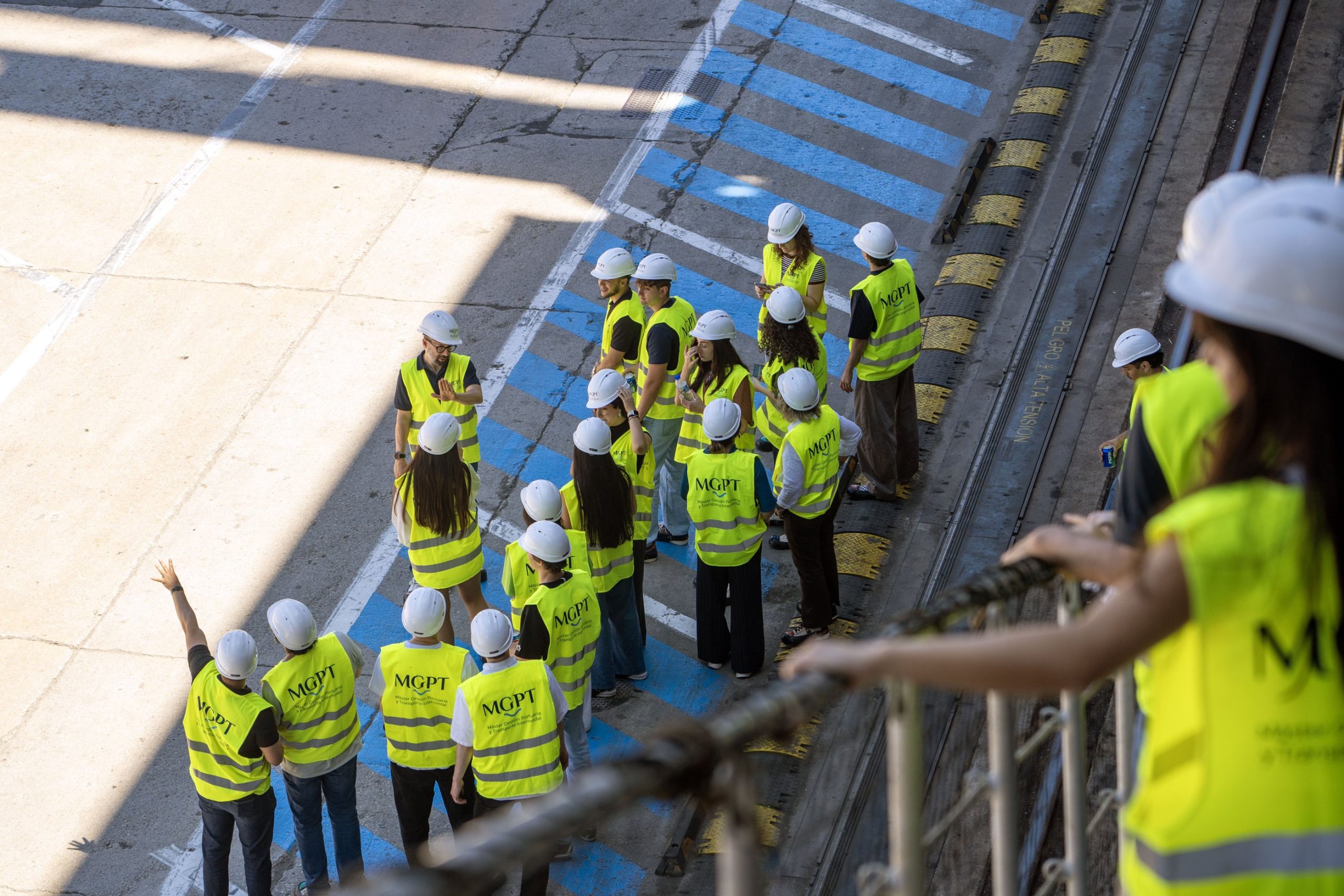
This infrastructure is built not only in ports and industrial facilities, but also in classrooms, training centres and universities. It is there that future maritime professionals develop not only the technical expertise to operate emerging technologies, but also the governance capabilities, collaborative mindsets and adaptive leadership required to steer one of the most profound transformations the maritime sector has ever experienced.
Investing in education is therefore not separate from investing in maritime decarbonization. It is an investment in the institutional capacity, human capital and long-term resilience that will ultimately determine whether the transition succeeds.
*Disclaimer: This English version has been generated with the support of AI-based translation tools. In case of discrepancies, the Spanish original prevails.